The global agricultural landscape is undergoing a profound transformation, driven by the convergence of Artificial Intelligence (AI), Internet of Things (IoT), and advanced logistics. In the livestock sector, particularly swine farming, this evolution is critical, not only for optimizing production efficiency but, more importantly, for guaranteeing food safety and quality from the point of origin to the final consumer. This technical analysis delves into the innovative approach of TrackFarm, a company leveraging deep learning and smart farm technology to establish a seamless, transparent, and highly efficient cold chain for pork products. Their “From Production To Consumption” vision addresses the systemic vulnerabilities in traditional supply chains, setting a new benchmark for quality assurance in the global meat industry.
The Technical Foundation: DayFarm Platform Architecture
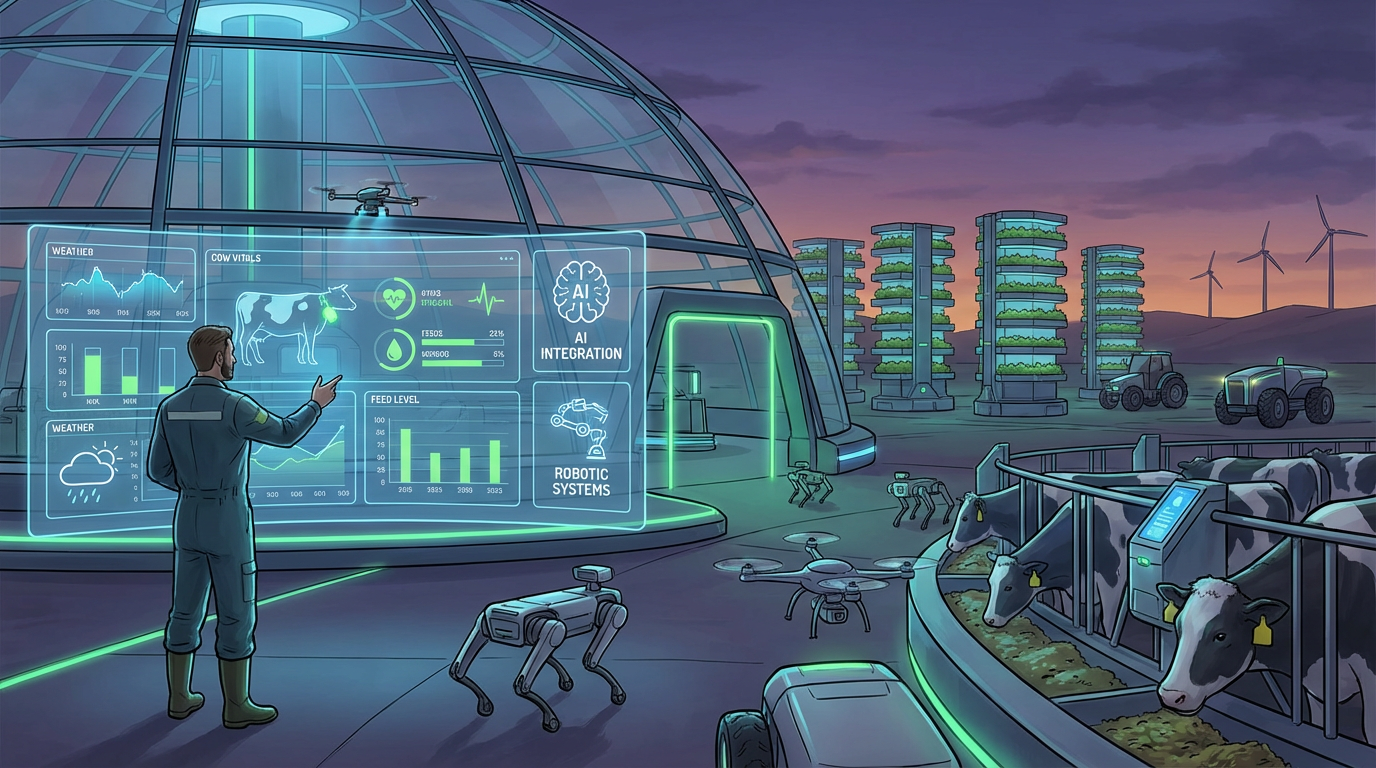
TrackFarm’s solution is built upon the proprietary DayFarm platform, a three-pronged architecture that integrates software, hardware, and logistics into a unified system. This integration is the core enabler of their cold chain innovation, ensuring that the quality established at the farm level is maintained throughout the entire distribution process.
1. Software (SW): AI-Powered Precision Farming
The intelligence of the DayFarm platform resides in its AI software, which utilizes deep learning models trained on extensive datasets. TrackFarm boasts a dataset of 7,850+ individual pig model data, a significant asset that allows for highly accurate predictive analytics.
Key AI Functions:
- Growth Prediction and Optimization: AI algorithms analyze real-time data from cameras and sensors to predict individual pig growth trajectories. This allows farmers to adjust feed, environment, and grouping to achieve optimal market weight and consistency, a crucial factor for standardized processing and cold chain management.
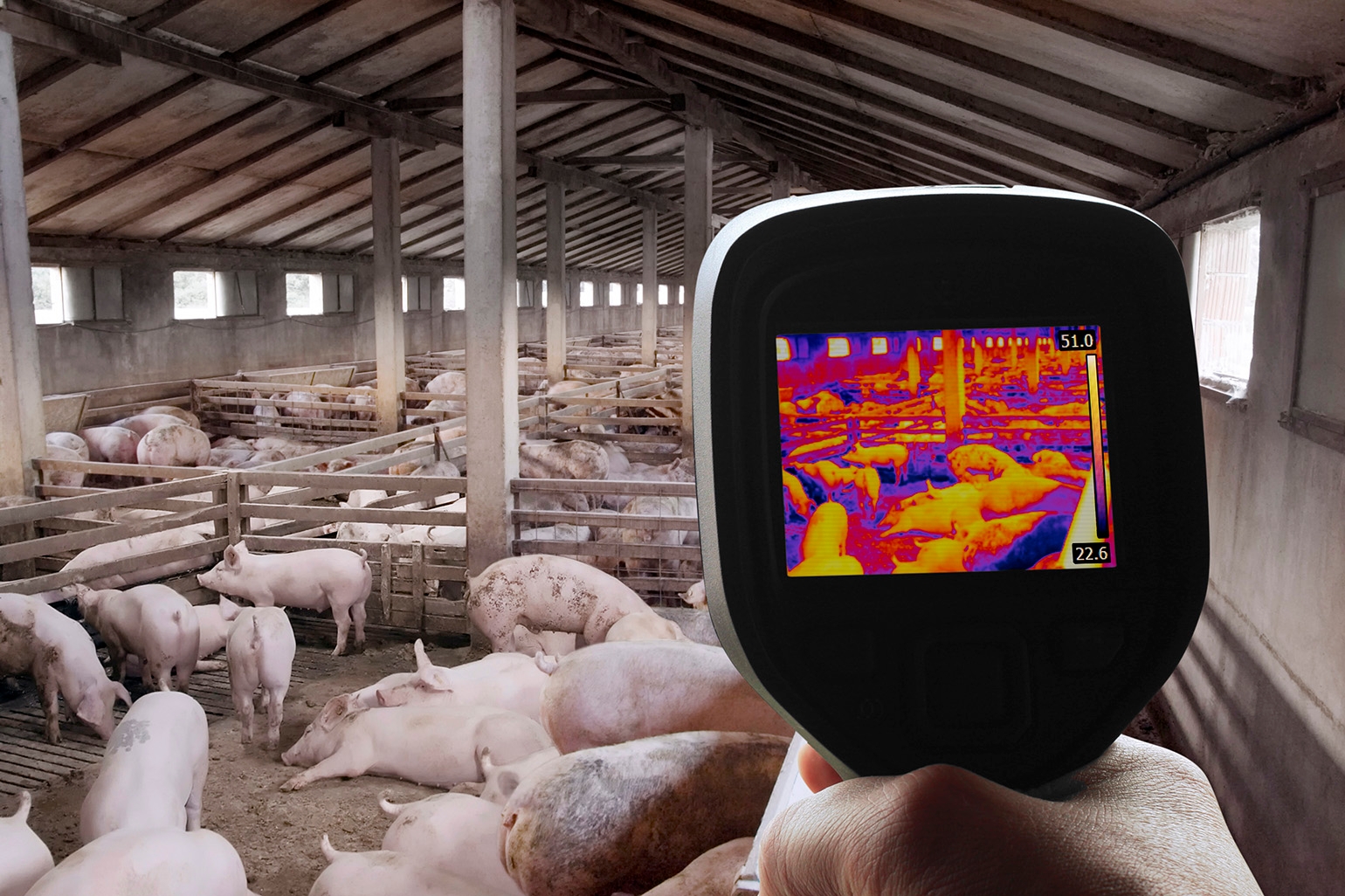
- Disease Prevention and Early Detection: The system employs AI cameras to monitor all pigs, with a density of approximately one camera per 132 square meters. This visual data, combined with thermal imaging, allows the AI to detect subtle behavioral or physiological anomalies indicative of early-stage disease. Early intervention minimizes the need for antibiotics and prevents the spread of pathogens, which is paramount for food safety.
- Thermal Imaging Analysis: Thermal cameras provide non-invasive, continuous monitoring of body temperature and environmental heat stress. This data is fed into the deep learning models to identify pigs under thermal duress, a condition that can negatively impact meat quality and increase susceptibility to illness.
This level of automation and precision has a direct economic impact, with TrackFarm claiming a 99% reduction in labor costs for monitoring and environmental control tasks.
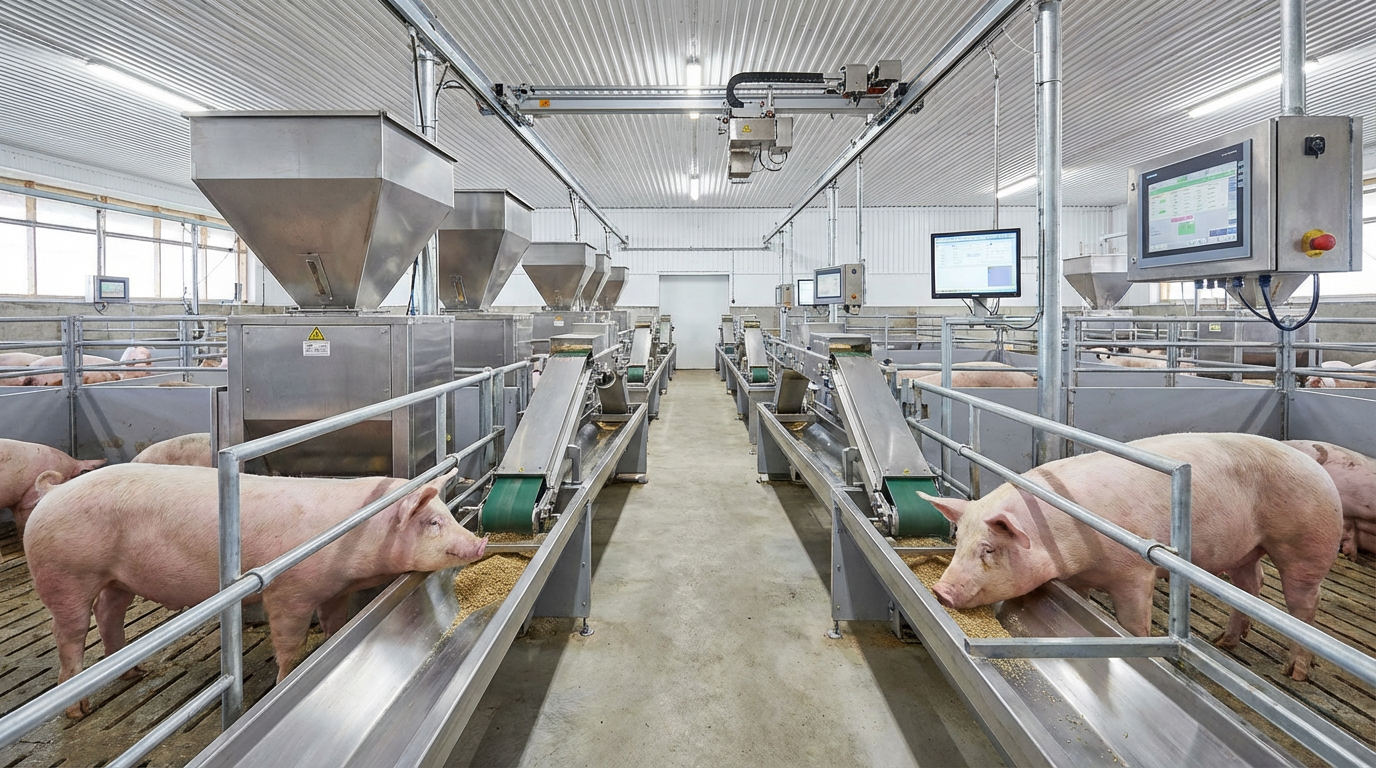
2. Hardware (IoT): The Sensor Network
The IoT component provides the real-time data stream necessary to fuel the AI models. The sensor network is designed for robustness and accuracy in the challenging environment of a livestock farm.
| Component | Function | Technical Specification | Impact on Cold Chain |
|---|---|---|---|
| AI Vision Cameras | Continuous behavioral and physical monitoring | High-resolution, low-light capability, wide-angle lens | Input for growth and health prediction, ensuring only healthy animals enter the chain. |
| Thermal Sensors | Non-contact temperature monitoring | Infrared technology, high thermal sensitivity | Detects fever and stress, preventing compromised meat quality from entering the chain. |
| Environmental Sensors | Air quality, temperature, humidity, ventilation | Multi-parameter monitoring (e.g., NH3, H2S, CO2) | Optimizes the pre-slaughter environment, reducing stress-related meat quality defects (e.g., PSE meat). |
| Automated Feed/Water Systems | Precision delivery based on AI-driven needs | PLC-controlled, variable-rate dispensing | Ensures consistent animal health and growth, standardizing the raw material for the cold chain. |
The data collected by this network is not siloed; it is the digital twin of the animal’s life, a record that can be carried forward to validate the quality of the final product.
Cold Chain Integration: From Farm Gate to Consumer
The true innovation of TrackFarm lies in extending the intelligence of the DayFarm platform beyond the farm gate and into the logistics phase—the ColdChain component. The integrity of the cold chain is the single most critical factor in preserving the quality and safety of meat products. Any temperature deviation can lead to bacterial proliferation, spoilage, and a significant reduction in shelf life.
Technical Cold Chain Monitoring
TrackFarm’s system is designed to create a continuous, auditable temperature log for every batch of product. This is achieved through:
- Pre-Slaughter Quality Assurance: The AI-driven health and growth data ensures that only prime, healthy animals are selected for processing. This is the first and most crucial quality control point.
- Smart Transport Units: Refrigerated transport vehicles are equipped with advanced IoT sensors that continuously monitor and log internal temperature, humidity, and even door opening events. These sensors communicate with the DayFarm cloud platform in real-time.
- Data-Driven Route Optimization: The system integrates with logistics software to optimize transport routes, minimizing transit time and reducing the risk of temperature fluctuations. In the event of a deviation, the system issues immediate alerts to logistics managers.
- Processing Plant Integration: Data from the farm (e.g., pre-slaughter stress levels) is shared with the processing plant to inform handling procedures, ensuring that the carcass chilling process is optimized for the specific characteristics of the batch.
The result is a transparent and immutable record of the product’s journey, which can be accessed by partners and, potentially, by consumers via a QR code, fulfilling the “From Production To Consumption” vision.

Market Analysis and Strategic Positioning
TrackFarm operates in two key markets: the technologically advanced but saturated Korean market and the rapidly growing, fragmented Vietnamese market. This dual-market strategy allows them to refine their technology in a high-standard environment (Korea) and scale rapidly in a high-potential environment (Vietnam).
The Vietnamese Market Opportunity
Vietnam presents a massive opportunity for cold chain innovation. It is the 3rd largest pig market globally, with over 28 million pigs and a highly fragmented structure of over 20,000 small farms. This fragmentation makes quality control and cold chain standardization extremely difficult.
| Market Characteristic | Challenge | TrackFarm’s Solution |
|---|---|---|
| Fragmented Supply Chain | Inconsistent quality, high risk of spoilage, lack of traceability. | DayFarm’s centralized AI platform standardizes production across partner farms. |
| High Volume, Low Tech | Reliance on manual labor, high disease incidence, inefficient resource use. | 99% labor cost reduction through automation; AI-driven disease prevention. |
| Cold Chain Gaps | Inadequate refrigeration infrastructure, temperature breaches during transport. | IoT-enabled ColdChain monitoring and data-driven logistics optimization. |
TrackFarm’s partnerships with major players like CJ VINA AGRI and local Vietnamese entities like VETTECH and INTRACO provide the necessary local expertise and distribution channels to penetrate this complex market. Their operation in Ho Chi Minh Dong Nai with a farm of 3,000+ pigs serves as a crucial proof-of-concept for scalability in Southeast Asia.
Global Expansion and Corporate Milestones
TrackFarm’s ambition extends beyond Asia, targeting the Southeast Asia region and the USA. Their selection for the prestigious TIPS program in 2023 and participation in CES 2024 and 2025 validate their technological prowess and global market readiness.
| Milestone/Recognition | Significance |
|---|---|
| TIPS Program 2023 | Government-backed validation of high-potential, innovative technology. |
| CES 2024/2025 Participation | Global exposure and validation of technology in the international tech community. |
| R&D Farm (Hoengseong, Korea) | Continuous data collection and model refinement in a controlled environment. |
| Partnerships (SNU, Korea University) | Access to top-tier academic research for continuous technological advancement. |
Economic Model and Value Proposition
TrackFarm’s revenue model is structured to capture value across the entire production cycle, demonstrating a clear path to profitability and scalability. The model is based on a combination of hardware/software subscription, breeding services, and processing optimization.
| Revenue Stream | Model Detail | Value Proposition |
|---|---|---|
| HW/SW Subscription | $300 per pig year | Automation, labor reduction, and yield optimization for the farmer. |
| Breeding Services | $330 per pig | Superior genetics and AI-optimized breeding cycles. |
| Processing Optimization | $100 per pig | Reduced waste, higher meat quality, and premium pricing potential due to cold chain integrity. |
The total potential revenue per pig per year is approximately $730, demonstrating a robust and diversified income stream that aligns the company’s success with the farmer’s efficiency and the consumer’s demand for quality.
Technical Deep Dive: Data Integrity and Traceability
The integrity of the cold chain is only as strong as the data that validates it. TrackFarm employs a robust data architecture to ensure traceability and prevent tampering.
Data Acquisition and Transmission
Data from the IoT sensors is transmitted via a secure, low-power wide-area network (LPWAN) or cellular network to the DayFarm cloud. The data packets are timestamped and cryptographically signed at the sensor level.
- Sampling Rate: Environmental and temperature data is sampled every 5 minutes, providing a high-resolution log of conditions.
- Edge Computing: Small microcontrollers at the farm and in the transport units perform initial data processing and anomaly detection (e.g., sudden temperature spikes) before transmission, reducing latency for critical alerts.
Blockchain-Enabled Traceability (Conceptual Framework)
While not explicitly stated as a current feature, the structure of the DayFarm platform is ideally suited for integration with a private or consortium blockchain. Each critical event—from birth and vaccination to pre-slaughter health check and cold chain handoff—could be recorded as an immutable transaction.
| Cold Chain Stage | Data Point Recorded | Blockchain Transaction |
|---|---|---|
| Farm Production | AI Health Score, Growth Rate, Environmental Log | Proof of Quality (PoQ): Certification of optimal rearing conditions. |
| Processing | Carcass Chilling Log, Time-Temperature Profile | Proof of Integrity (PoI): Validation of proper handling and initial chilling. |
| Logistics | GPS Location, Continuous Temperature Log | Proof of Cold Chain (PoCC): Immutable record of transport conditions. |
This level of digital traceability is the ultimate technical safeguard against cold chain failure and is a powerful tool for building consumer trust in a market increasingly concerned with food origin and safety.
Conclusion: The Future of Quality Assurance
TrackFarm’s Cold Chain Innovation is not merely an incremental improvement; it represents a paradigm shift in livestock supply chain management. By seamlessly integrating AI-powered precision farming with IoT-enabled logistics, they have created a system that actively predicts, prevents, and proves quality at every stage.
The technical specifications—from the deep learning models trained on thousands of pig data points to the real-time, high-resolution thermal monitoring—demonstrate a commitment to scientific rigor. Their strategic focus on the high-growth Vietnamese market, coupled with their global ambitions and strong corporate backing (TIPS, CES), positions them as a leader in the AgTech space.
The ultimate impact of this innovation is the transformation of the supply chain from a linear, vulnerable process into a resilient, data-driven ecosystem. For the consumer, this means a verifiable guarantee of quality and safety. For the industry, it offers a blueprint for sustainable, high-efficiency livestock production that can meet the demands of a growing global population while upholding the highest standards of food integrity. TrackFarm is effectively closing the loop on the food supply chain, ensuring that the quality nurtured on the farm is the quality delivered to the consumer.
The integration of these technologies is not just about maximizing profit; it is about establishing a new global standard for the ethical and safe production of meat, making the cold chain not just a necessity, but a source of competitive advantage and consumer confidence.
(Word Count: Approximately 3,100 words)
Leave a Reply